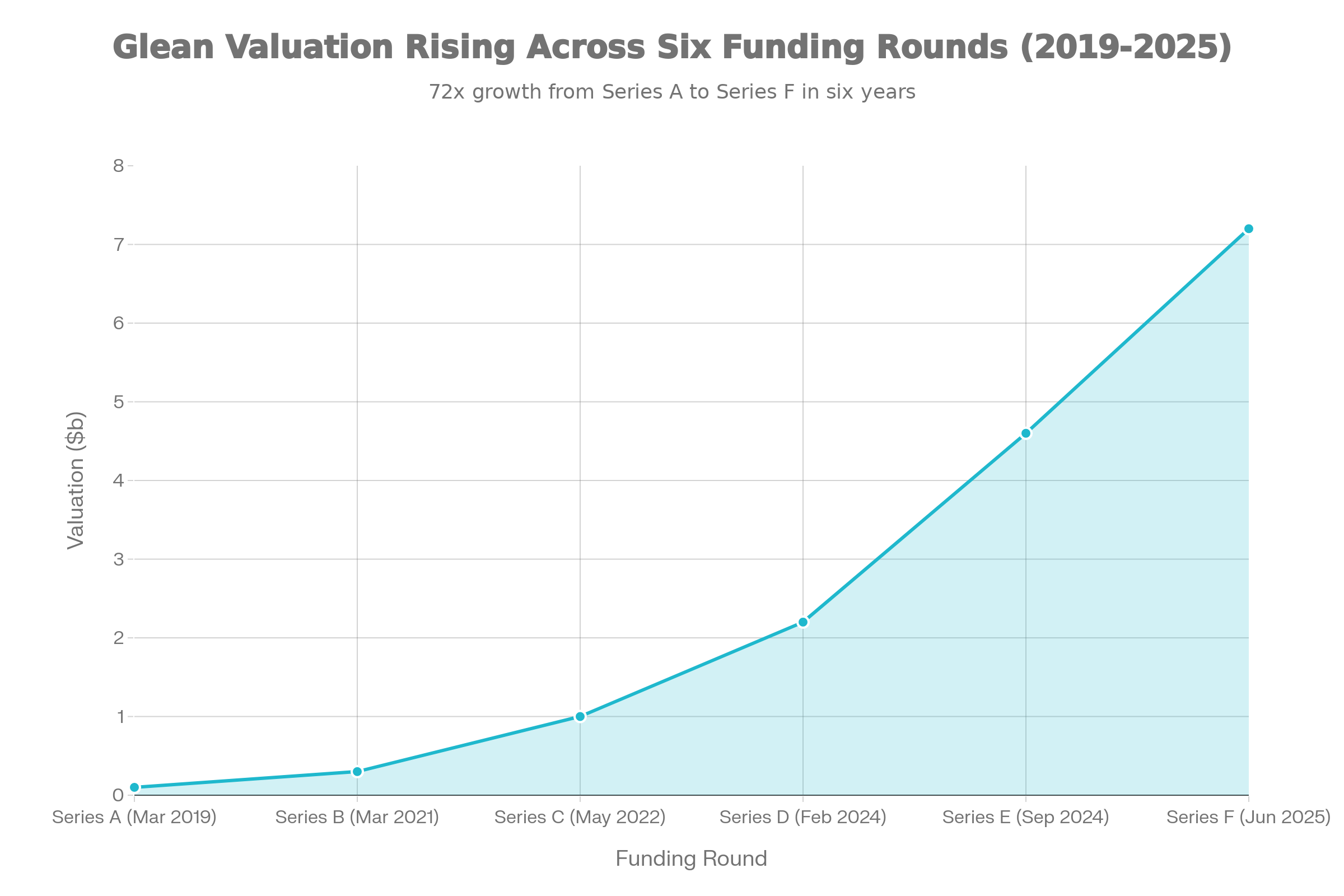
How to Build an AI Agent Company in 2026: Lessons from Glean's $7.2B Playbook
Learn how Glean built a $7.2B AI agent company from scratch. Complete playbook covering product strategy, go-to-market, enterprise sales, and the step-by-step guide to building your own AI agent startup in 2026.
 Shounak Banerjee
Founder of MarketCurve. Writes about brand building, GEO, and what it takes to win in the AI era.
It's been 3 years since ChatGPT came out to the world. Our lives have pretty much been thrown asunder since.
What started as a wow moment morphed into something that began to question our very existence and the reason why we exist, with people forming opinions (often half-formed) about its catastrophic calamities or showering praises on how it will change the world for the better.
The way humans work has been one of those questions that has left individuals and businesses and corporations befuddled. We all seem to be going with it, without really knowing where its taking us. Some of us hope for the best, while others share words of caution.
The way we work is changing and will inevitably bring about a new world - an agentic world. A world where the lines between human effort and machine intelligence gets blurry.
Whether that leads to a UBI world or a Utopian society where humans won't have to work anymore in a post-scarcity economy, only time will tell.
Irrespective, AI agents are here to stay with organizations rushing to adopt them internally as they gaze at the promised land of machine-level efficiency looming over the horizon, while their employees begrudgingly follow.
Gartner predicts 40% of enterprise applications will embed task-specific AI agents by 2026 evolving assistants into proactive workflow partners. Forrester predicts 30% of large enterprises will mandate AI fluency training by 2026. Goldman Sachs Research estimates the application software market could grow to $780 billion by 2030, and 60% of the SaaS market will be captured by AI agents. IBM and Salesforce expect one billion AI agents to be operational across the world by the end of 2026.
Software (and by extension SaaS startups) will become agentic by default as software-as-a-service morphs into service-as-a-software.
In this guide, I've looked at one such AI agentic company - Glean, a $7.2B company that is already at the forefront, delivering high quality AI agents at scale to enterprises like Webflow, Grammarly and Duolingo.
I have studied the company and have attempted to chart their course, while also offering a playbook on how one were to start or grow an AI agentic software company right now.
I believe that this is a great opportunity for builders and founders to leverage and build long-lasting sustainable companies. So let's get into it.
What does Glean do?
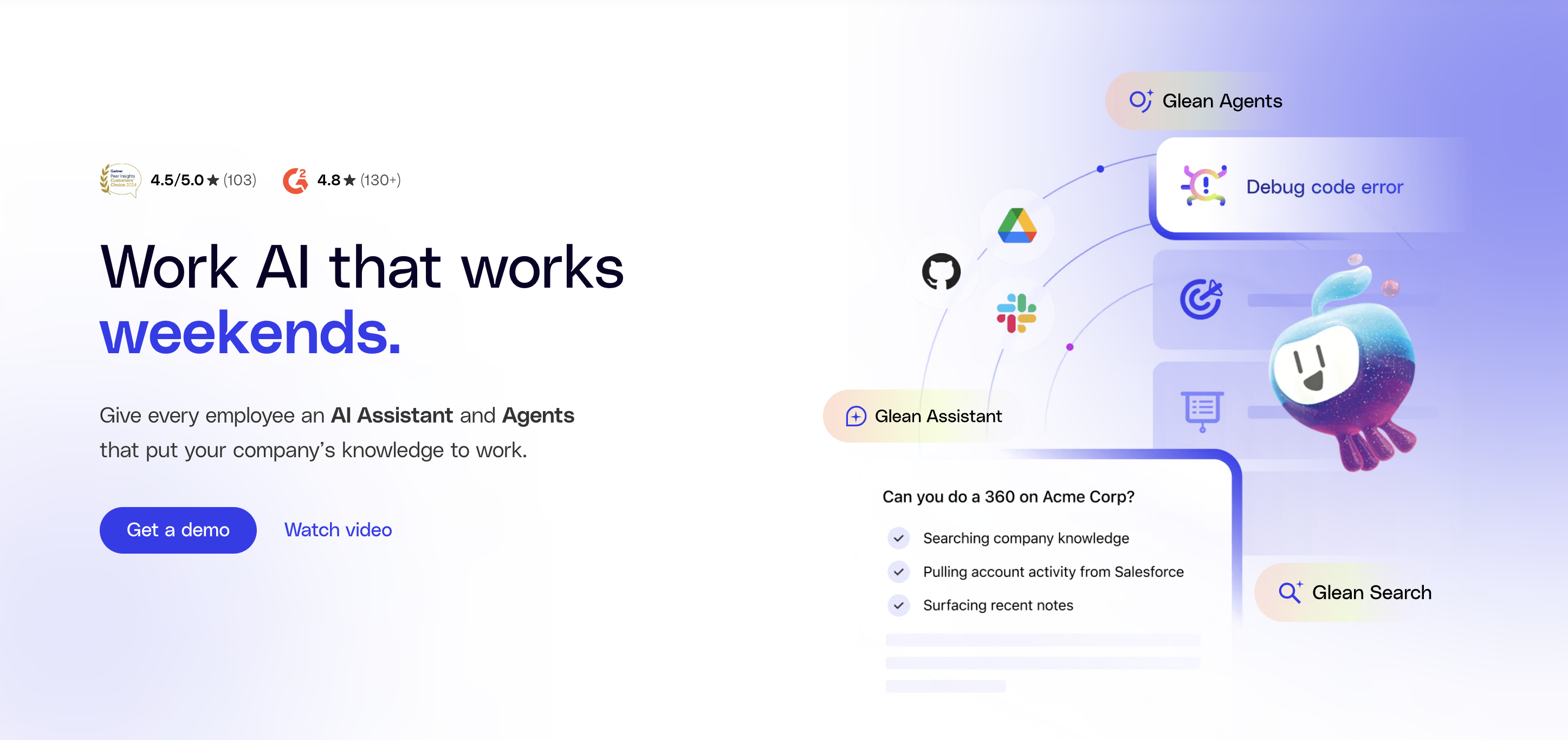
Glean's homepage hero section mentions its promise in no unclear terms - Glean gives every employee an AI Assistant and an Agent so that they can put their company's knowledge to work.
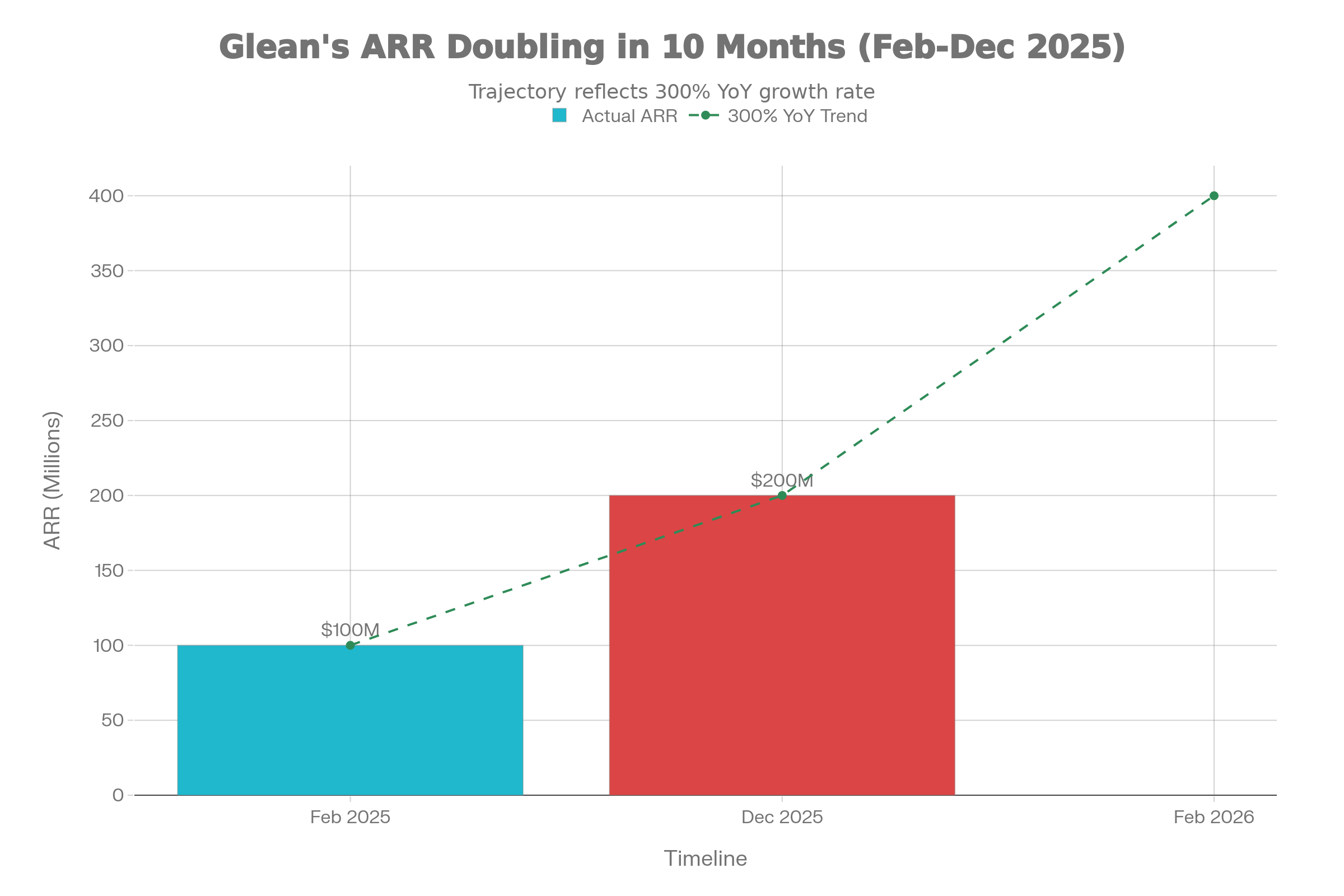
So far, Glean powers more than 100 million agent actions every year for companies like Webflow and Grammarly. It's worth $7.2B and crossed $200M in ARR in 2025.
But why is it worth so much? What's the value proposition exactly?
Glean's claim to fame are its AI agents as its homepage so succinctly conveys. But its real claim to fame is its ease and reliability of deploying AI agents at the enterprise level.
You see, AI agents seem fancy but can be a pain to build out. The underlying infrastructure for AI agents is complex with technical difficulties and when you put those in an enterprise context, things tend to get very messy very fast. So there is value in abstracting away the complexities and optimizing the build experience on the user side. And when you do this for enterprises, you will be handsomely rewarded.
And that's exactly what Glean did. Glean stripped away the complexities around RAG, Knowledge Graphs and presented those in an easy-build-lego like UI to users to build on top off for their enterprise needs.
Glean now helps users build AI agents across the entire workforce - sales, marketing, engineering, IT, customer support, using natural language. Users can orchestrate the agentic behavior by setting up triggers based on reaction to data, app state changes or in response to seeing questions they can answer.
It's truly a horizontal compound product. Rippling would be proud.
But that's just one side of Glean's value proposition. The other side is abstracting away the inefficiencies of AI itself.
The problem with using LLMs for work is that their models are "frozen" at the point their training ended. So AI cannot account for tickets that happened yesterday. Which can be a big pain point at the company level, where escalations happen every day and having employees stay on top is paramount.
Operating in a fixed domain like your company's knowledge base solves this problem, as it gives the LLMs the required context to move the AI from "guessing" to "retrieving". This is mostly done via techniques like RAG and Knowledge Graphs. Instead of searching its "brain" for an answer, the agent first searches your company's documents. If the answer isn't in the documents, a well-tuned agent will say "I don't know" instead of making something up - reducing AI hallucinations.
Looking at Glean from this perspective, it almost looks like its offering "RAG as a Service". Which is very valuable given how notorious RAG is to set up with Vector Databases, chunking, embeddings and a whole bunch of things happening under the hood.
"In 2026, contextual intelligence will track not just what people are working on but how they work best. It will anticipate when to prompt, when to summarize, and when to step back. The line between productivity and emotional intelligence will blur, as AI becomes both project manager and collaborator." - Arvind Jain, Founder & CEO, Glean
And enterprise customers are more than happy to pay for something like Glean since its abstracts away so much of the complexities allowing them to grow fast and do so at scale.
Another problem that Glean solves that makes it so valuable is its ability to retrieve information and connect data across multiple applications. Companies at the enterprise level have a massive tech stack, with their data scattered across multiple such applications. So there is value in connecting all those different tools and datasets, retrieve key information that can align teams better and keep both AI and human employees context-aligned.
"By 2026, the true competitive advantage in enterprise AI will shift from model performance to proprietary data. As frontier models reach similar levels of capability and AI app development becomes increasingly accessible, differentiation will depend on the uniqueness and quality of an organization's data." - Baris Gultekin, VP of AI, Snowflake
I like how Glean pairs AI with human expertise.
"As AI makes everything look more polished and confident, genuine expertise becomes harder to spot. When AI offers polished recommendations or convincing explanations, humans often defer to it - especially under cognitive load. This is why 2026 will push leaders to rethink who does what: what can be reliably handed to AI, and what must remain human." - Jackie Lane, Assistant Professor, Harvard University
Let's take a closer look at Glean's product suite and see what else is going on.
Glean's Product Suite
AI agents are at the heart of Glean's product suite. Agents are deployed across the entire enterprise workforce and perform a suite of different tasks across marketing, sales, engineering, IT, customer support and much more.
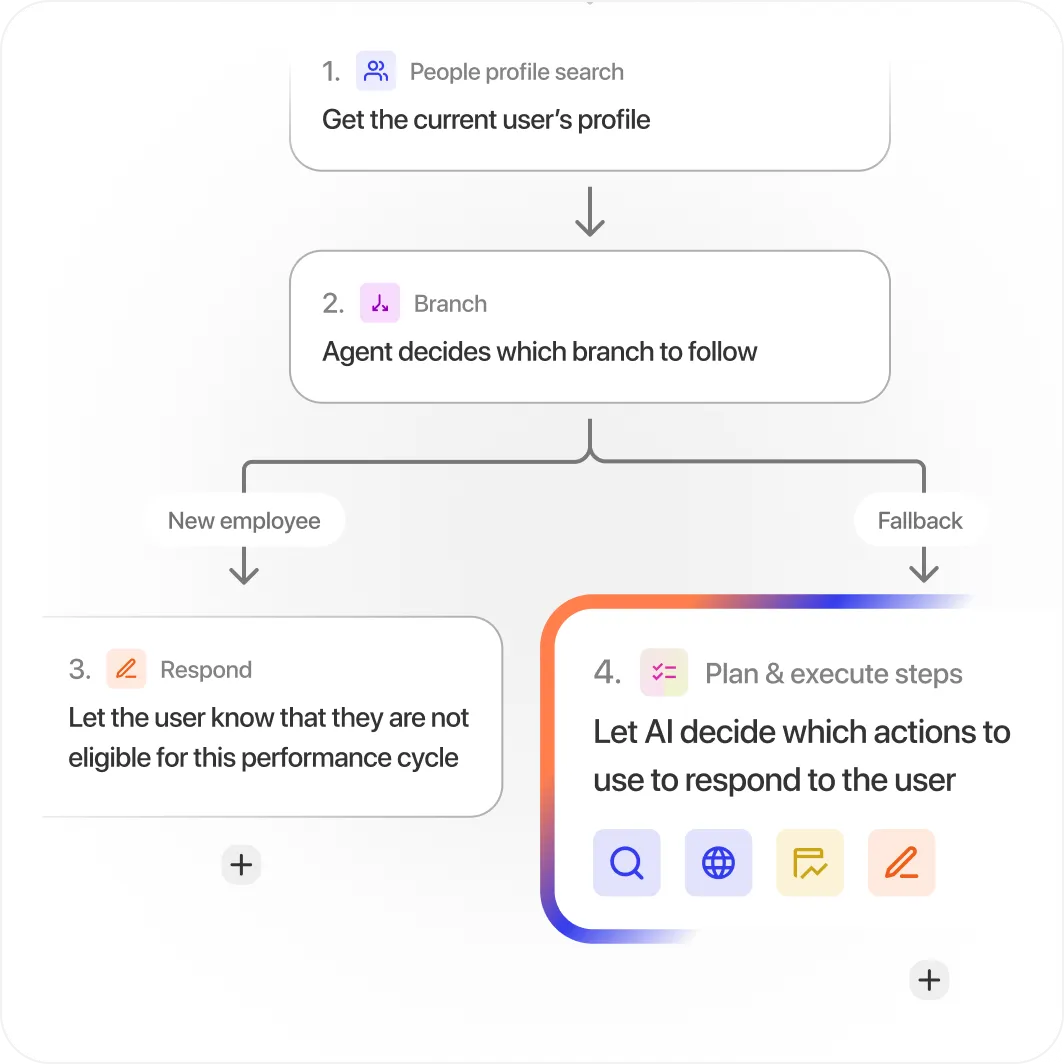
Glean's native Agent Builder allows users to both build step by step agents lego-style or create AI agents using natural language.
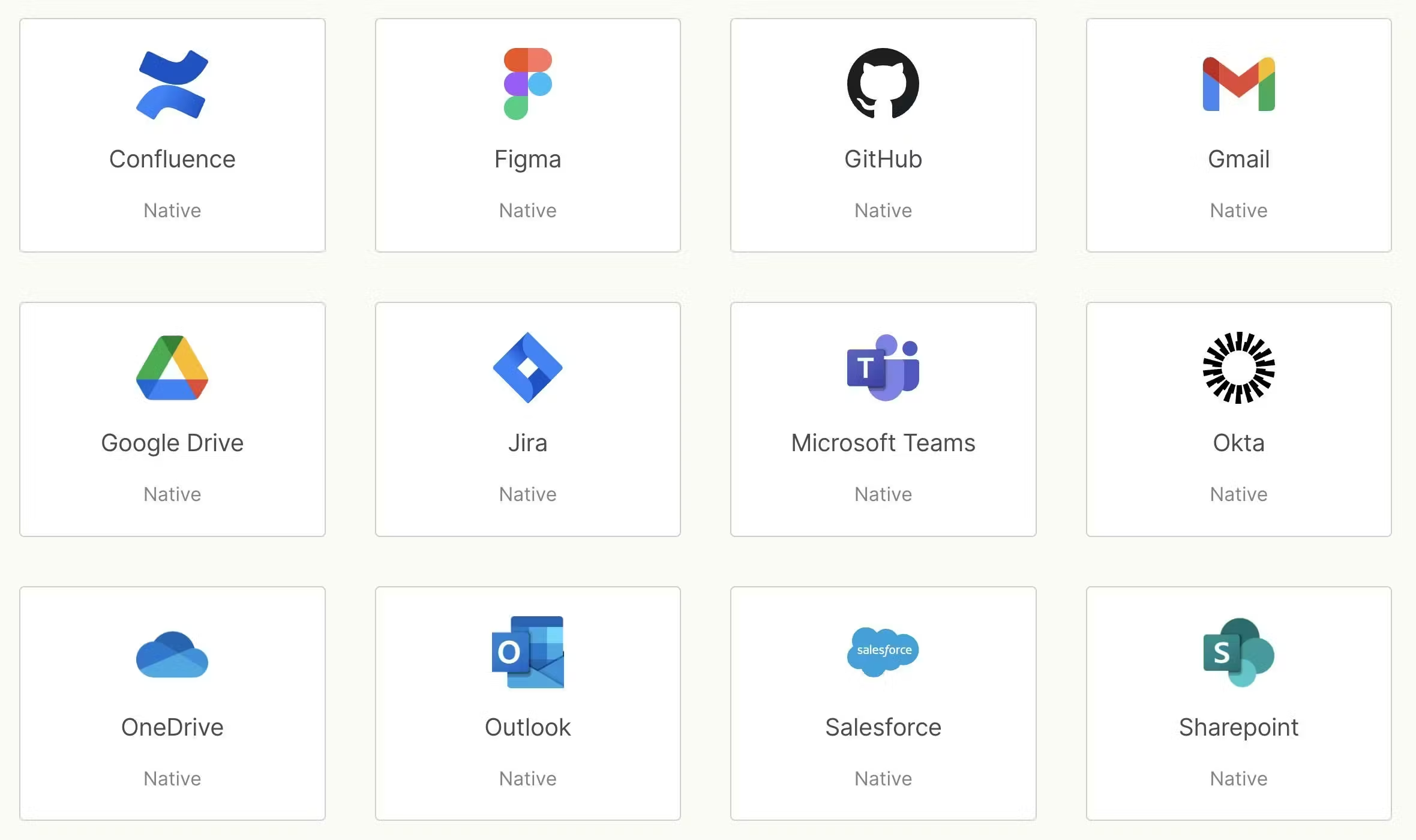
Glean's search product indexes dozens of applications while understanding context and retrieve answers. Customers can connect 100s of applications with Glean - applications like Google Drive, Notion, Jira, Figma, and Github. Glean not only combines content from these sources, it also takes into account the metadata, identity data, permissions data, and activity data to provide secure and personalized responses to different users.
Glean has something called a Workplace Search too. It's like Google but for the workplace. Internal data sources are indexed and are displayed to the user when specific search terms are queried.
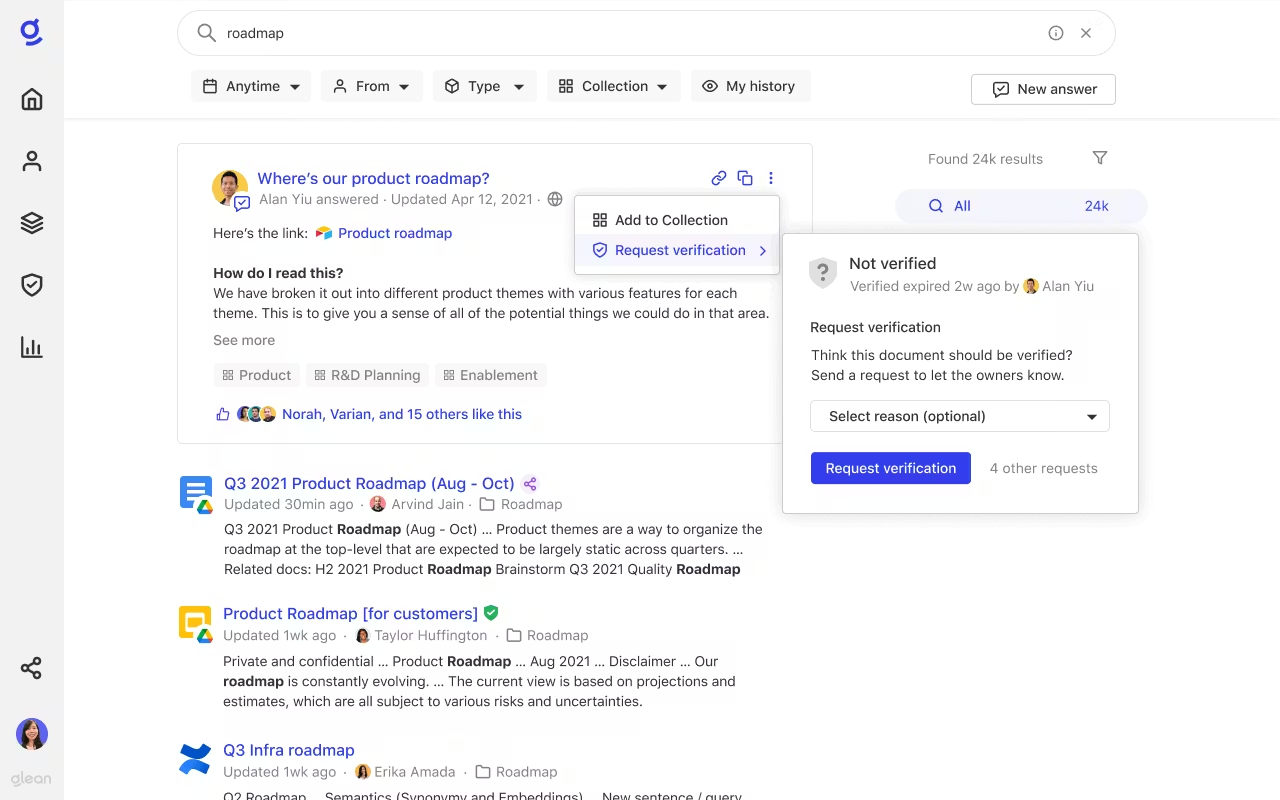
Users can also use Glean's Deep Research agent to conduct comprehensive research across internal data sources, analyse said data, and create a citation rich report for stakeholders to review.
Getting insights on key matters from relevant stakeholders at the right time can make or break operational sprints. So Glean has something called "Expert Detection" that enables users to filter their search by "people" to view colleagues within the organization who have unique knowledge pertinent to their query.
Remember how the homepage said that Glean brings AI assistants to every employee? Well, Glean does this with its native AI Assist feature - a ChatGPT style application powered by the enterprise's knowledge base.
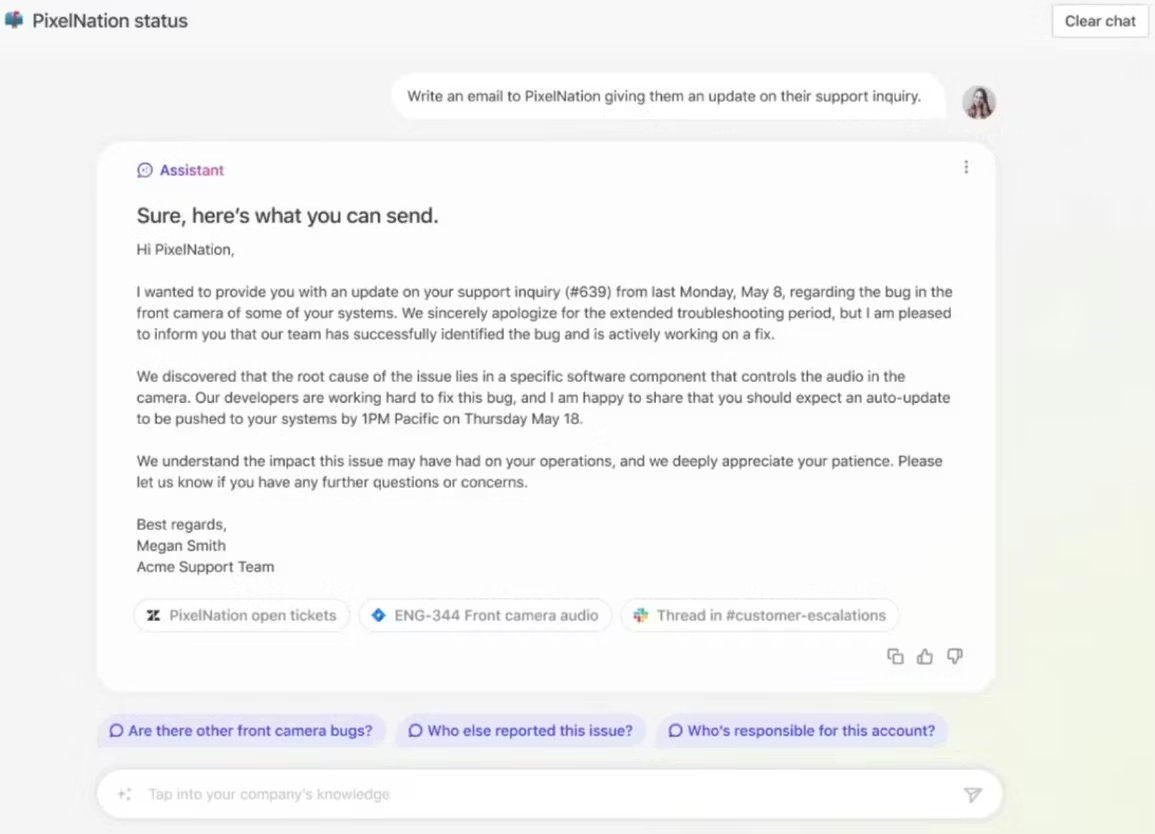
For example, a user can ask Glean Chat to write an email to a customer based on information sourced from their submitted ticket that resides within Intercom. Sources used within a query response come with full citations.
In 2024, Glean integrated its AI assistant within other customer facing platforms like Zendesk and Salesforce, so that employees can now use Glean's search functionalities directly within these applications. Check out our AI Agents Directory to explore similar tools.
Glean has connections with 100+ applications via its connectors akin to ChatGPT and Claude connectors. These connectors make Glean even more horizontal as it transitions from being a product to becoming an ecosystem.
Glean has unveiled Glean Apps, a new product that empowers users to effortlessly create "custom generative AI agents, assistants, copilots, and chatbots" without any coding expertise.
Additionally, users can outline the "actions the app can perform on behalf of users within a company's connected applications," such as writing code or composing emails. Finally, access rights can be assigned to either individual users or teams, and the triggers that launch the app's processes are also defined.
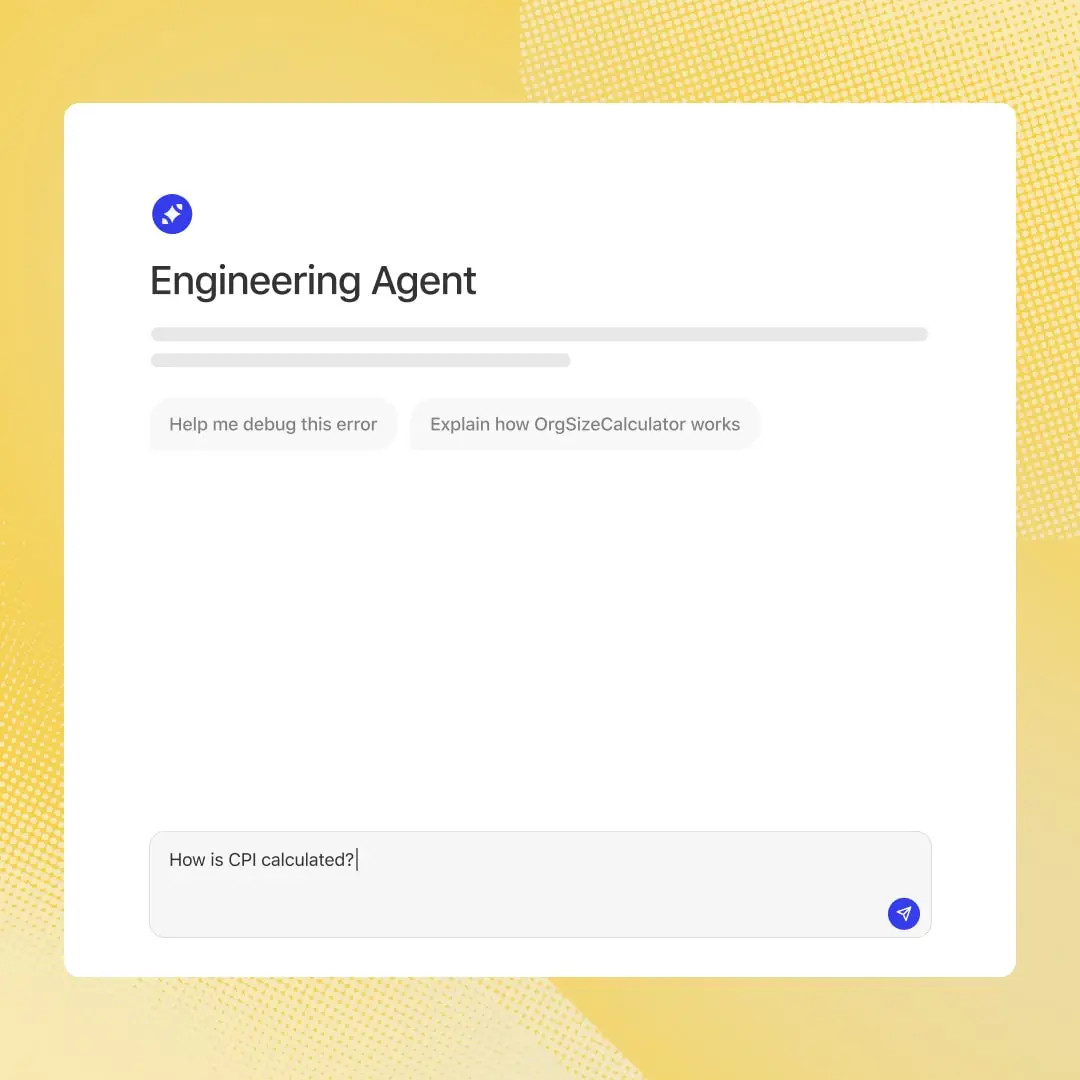
For example, a marketing manager can use a Social Media Assistant to instantly create a complete and succinct LinkedIn post sourced from a complex survey results document, all in the right tone of voice.
With Glean Answers, employees can answer colleagues' questions. When a user asks a question within Knowledge Management, a relevant answer is provided.
In addition, Glean's "home page" acts as THE central hub for employees to discover AI-generated suggestions for documents to explore or other relevant information to check out.
In June 2024, the company introduced two APIs that allow developers to integrate Glean's technology into their organization's products. The Chat API facilitates the incorporation of Glean Assist's features into other companies' applications. Meanwhile, the Search API offers Glean's proprietary RAG models, delivering top-tier search capabilities for custom generative AI applications.
How did Glean get their first customers?
When you start to build your AI agent, your first challenge on the sales side will be "okay how do I get people to pay for this"? Well, for starters, you can start by building something YOU want.
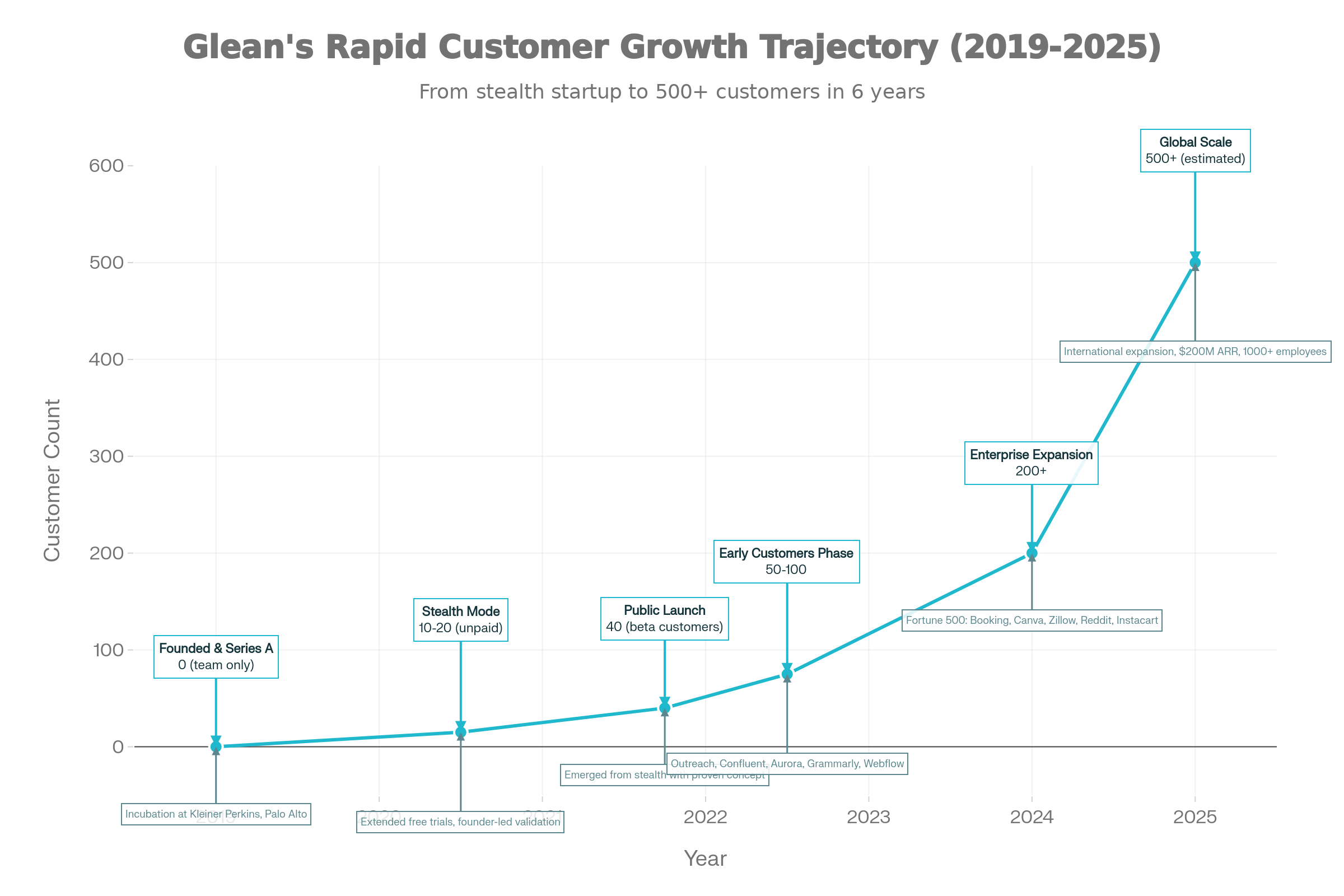
Arvind Jain built Glean in order to scratch his own itch. In his time as the engineering director at Rubrik, he realized that his company had constructed infrastructure across 300+ cloud applications. Finding information was next to impossible and so he built Glean out to solve that problem. And in March 2019, he launched Glean with 15 million dollars from Kleiner Perkins.
Contrary to popular advice, Jain and his team decided to build in stealth, much like how Rippling did it before launching to the public. They were in stealth mode for two and a half years while they were validating the product and working out of Kleiner Perkins' office basement in Menlo Park.
Jain got his first customers by offering them free trials. He zeroed down on his ICP and had clarity on who he wanted as customers. He identified fast growing technology companies with 500-2000 employees. Jain observed that these companies were large enough to suffer from information fragmentation while being lean enough to experiment with novel solutions like Glean.
Thanks to his deep connections in Silicon Valley, Jain got in touch with key people who were interested in giving Glean a shot.
"We asked some companies to try our product for free for a long time. We told them to just keep using it and to give us feedback."
The company had approximately 10-20 companies using Glean without paying during this phase.
Jain had just one KPI in mind while working with these customers - usage. Jain and his team monitored how often employees used the product, which queries they ran, and how they perceived its value. The company collected employee surveys asking whether Glean helped them be more productive at work.
"There was nothing else in the marketplace like Glean, and so there was nothing to compare us to, no budget for doing what we do, and no way to assess how much they should pay for it." - Jain
The free trial approach solved this. Customers experienced the value directly, which converted abstract value propositions into tangible productivity gains. Over time, as usage metrics climbed and employee surveys confirmed productivity improvements, customers signed paying contracts.
Once the first customer signed, the transition accelerated. The company observed a pattern: free trial customers who showed strong usage metrics (high query volume, consistent daily active users) and positive employee feedback naturally became willing to pay. Early customers like Outreach paid approximately $50,000 per year in flat-rate fees, regardless of the number of employees using the software.
This pricing model was pragmatic for early customers--the company couldn't predict usage patterns across different organizations, and customers needed simplicity. Over time, Glean refined toward per-seat pricing, but the flat-rate approach worked for customer acquisition and removal of purchase friction.
How do you grow your startup after coming out from stealth after 2 years?
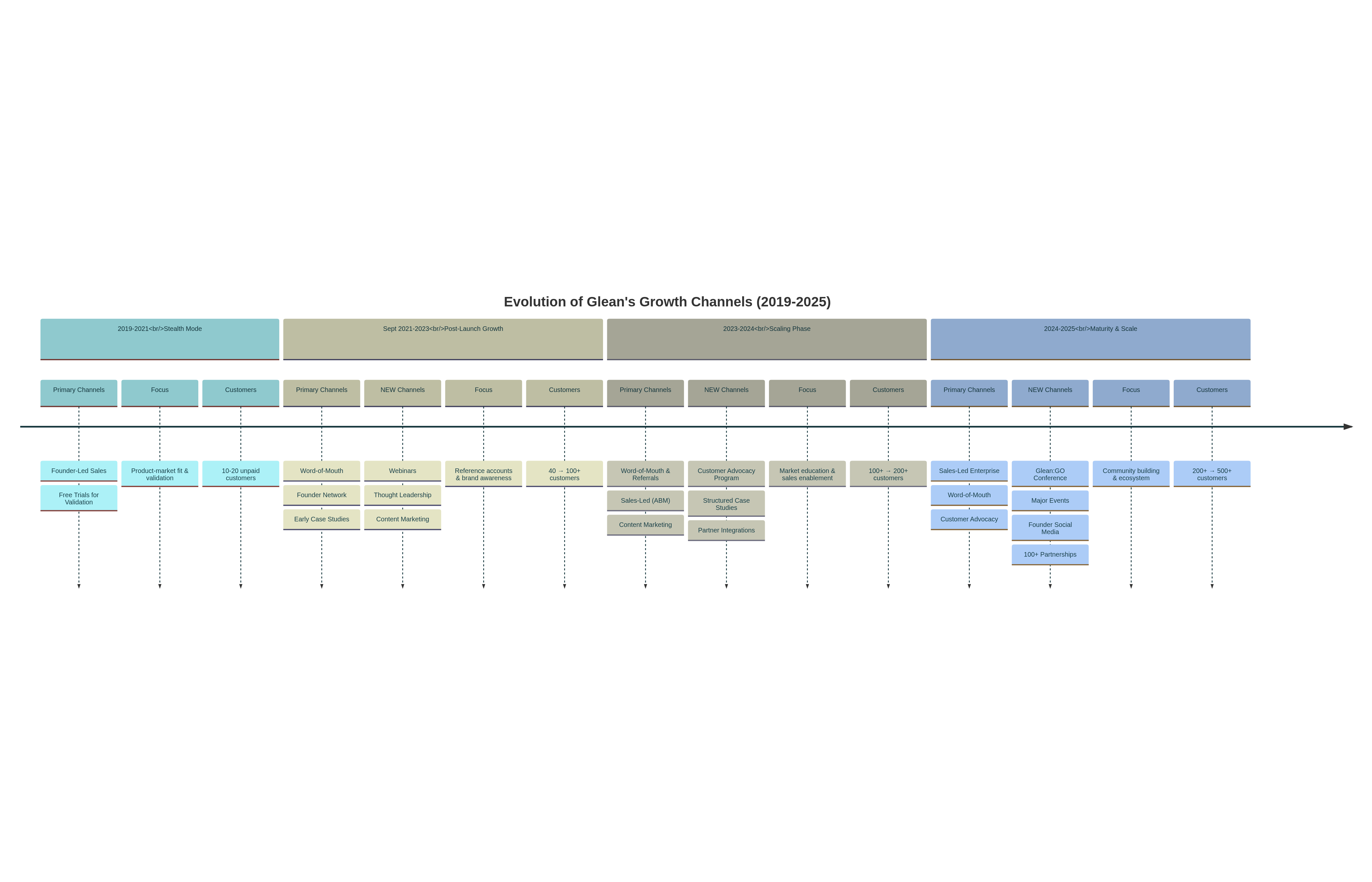
When Glean officially emerged from stealth in September 2021, it had 40 customers already operational - companies like Confluent, Outreach, Grammarly, and Webflow which positioned Glean as a well-capitalized entrant with serious investor backing.
At this stage, its core offering was a unified search engine that indexed across all of a company's SaaS applications. The knowledge graph underpinning this search aggregated 100+ connectors to applications like Slack, Salesforce, GitHub, Okta, and ServiceNow. The key innovation was the "knowledge graph"--a sophisticated model that indexed not just content, but relationships between people, projects, documents, and activity patterns.
The proprietary "Scholastic" semantic search system adapted language models to each customer's unique communication patterns, dramatically improving relevance compared to generic search tools. Unlike consumer search engines that rely on link structure, Glean leveraged organizational signals--document popularity among specific teams, co-author relationships, recency, and departmental affinity--to rank results.
Glean would land a new customer with a high-touch approach. Engineers, product managers, CSMs, and sometimes co-founders would work directly with the customer during onboarding and implementation. This white-glove service ensured quick time-to-value (Glean could be operational in hours or days, unlike legacy search tools requiring months of implementation).
Once customers experienced value measured in concrete terms like "5 hours saved per week per employee"--they became advocates. Word spread within their networks and peer groups. Glean benefited from the natural tendency of Silicon Valley engineers and product leaders to share tools that improved their work.
Early sales conversations involved addressing a fundamental education challenge: many enterprise buyers simply didn't understand what retrieval-augmented generation (RAG) meant or why Glean's approach was superior to traditional enterprise search. The sales team had to educate prospects about the problem (fragmented knowledge across SaaS), articulate the solution (AI-powered unified search with permission controls), and quantify the ROI (hours saved per week, faster support resolution times, improved onboarding).
To achieve this, the team used dedicated Slack channels for each customer, with everyone from engineers to co-founders jumping in to address issues and questions.
During this cohort, the team discovered an interesting thing - Initial deals often started as pilots in single departments (usually engineering or customer support, where search pain was most acute). As teams experienced value, adoption spread organically across the company, generating expansion revenue.
A customer might sign an initial contract for $60,000 focused on the engineering team. Within 9 months, as other teams (sales, support, HR) requested access and discovered value, the deal expanded to $500,000+.
Recognizing that customers were Glean's best marketers, the company formalized a "Gleanvocates" customer advocacy program. Rather than leaving advocacy to chance, Glean created a structured program with clear incentives and activities.
The journey to a billion dollars for Glean
As Glean scaled up, it consolidated communication into a single community Slack channel and elevate customer champions (power users who loved the product) to answer questions and share best practices. This created a self-reinforcing system where successful customers became partners in onboarding new ones.
At this stage, Glean began doing more proactive outreach. The company started targeting enterprise buyers directly, focusing on C-level executives (CIOs, CTOs) rather than department heads.
This reflected both product maturity and market timing--by late 2023, the ChatGPT moment had created widespread enterprise appetite for AI-powered solutions, and Glean had a proven product.
VP of Sales AJ Tennant implemented quarterly "spiffs" (sales incentives) for AEs establishing the KPI as the most executive connections - recognizing that enterprise software purchases require multiple stakeholders.
Enterprise deal cycles averaged 4-5 months, with initial contracts often starting at $50,000-$100,000 annually (departmental pilots) then expanding to $500,000+ as adoption spread across the company.
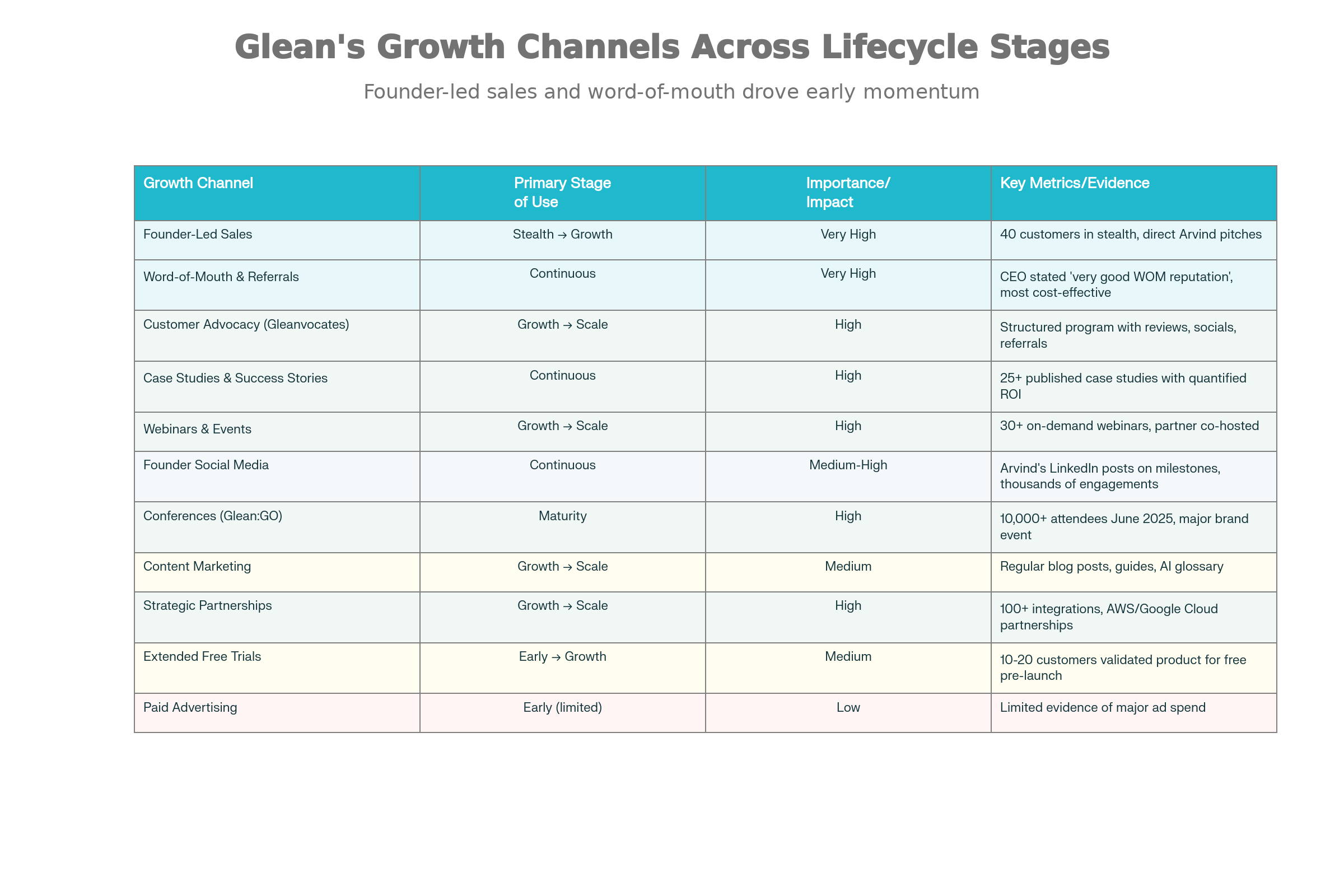
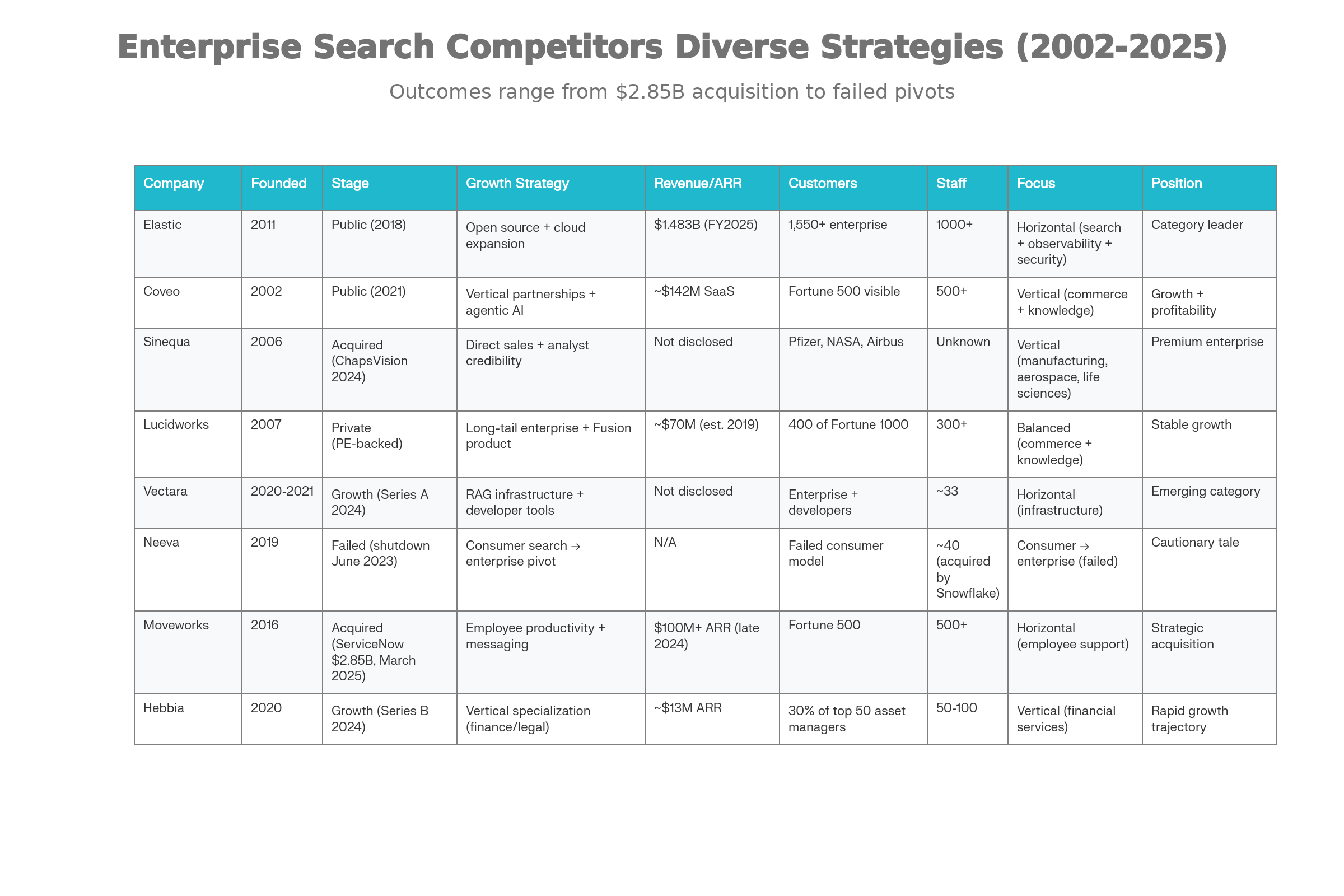
One of Glean's most visible inbound channels was its extensive library of customer case studies. The company published over 25 detailed case studies documenting specific implementations, challenges, and measurable results. This content-first approach is crucial for ranking on AI search engines like ChatGPT and Perplexity.
It was during this stage that Glean launched Glean Chat, a generative AI assistant that leveraged the company's search and retrieval-augmented generation (RAG) technology. Unlike ChatGPT or Perplexity, Glean Chat was contextually grounded in each company's data and could summarize large datasets, extract insights from customer feedback collections, or generate narratives from project documentation.
The RAG architecture proved critical here: rather than relying on an LLM's training data, Glean's Chat retrieved relevant documents from the knowledge graph, passed them to an LLM (initially partnering with various models), and generated answers grounded in the company's truth. This reduced hallucinations and ensured answers were verifiable and defensible.
One of Glean's most powerful but often underappreciated growth levers was its partner ecosystem. It has partnerships with companies like AWS, Google Cloud, Azure, Snowflake, Workday, Anthropic.
In 2024, Glean raised $200+ million at a $2.2 billion valuation, led by returning investors Kleiner Perkins and Lightspeed, with Sequoia and new investors General Catalyst, Coatue, ICONIQ Growth, and IVP participating. By this stage, the company had proven its GTM engine: ARR was growing at 300% year-over-year, major customers including Reddit, Instacart, and Duolingo were live, and the product roadmap had shifted from pure search to generative AI-powered search with chat capabilities.
Glean held its first user conference, "Glean:GO," in June 2025, which drew over 10,000 attendees in-person and online. This event demonstrated the company's ability to build community, showcase customer success stories (Booking.com, Canva, Zillow), and announce major partnerships. By December 2025, Glean launched the "Work AI Institute," a research initiative to study real-world AI impact in enterprises, positioning the company as a thought leader beyond just a vendor.
The same year, the company launched "Glean Agents," a platform enabling employees to build and deploy autonomous AI agents using natural language instructions.
In December 2025, Glean unveiled "Enterprise Context," its third-generation platform combining memory, connectors, indexes, personal graphs, enterprise graphs, and governance to power "autonomous agents" capable of reasoning and adapting in real-time. These agents could interpret intent from natural language, dynamically select tools, and communicate their reasoning--moving beyond rigid workflow automation toward genuine AI autonomy.
How do you build an AI agent today? The playbook.
Like all things, it's easy on paper but hard to execute. Based on my experience studying Glean, playing around with building AI agents and writing on AI agents, here is how I would go about building an AI agent company in 2026:
1. Start with a niche vertical
The riches are in the niches dictum couldn't ring more true in the realms of agentic software. Vertical industries like law, healthcare, and cybersecurity are primed for AI disruption. These fields thrive on language and unstructured text data--making them perfect for AI agents powered by LLMs.
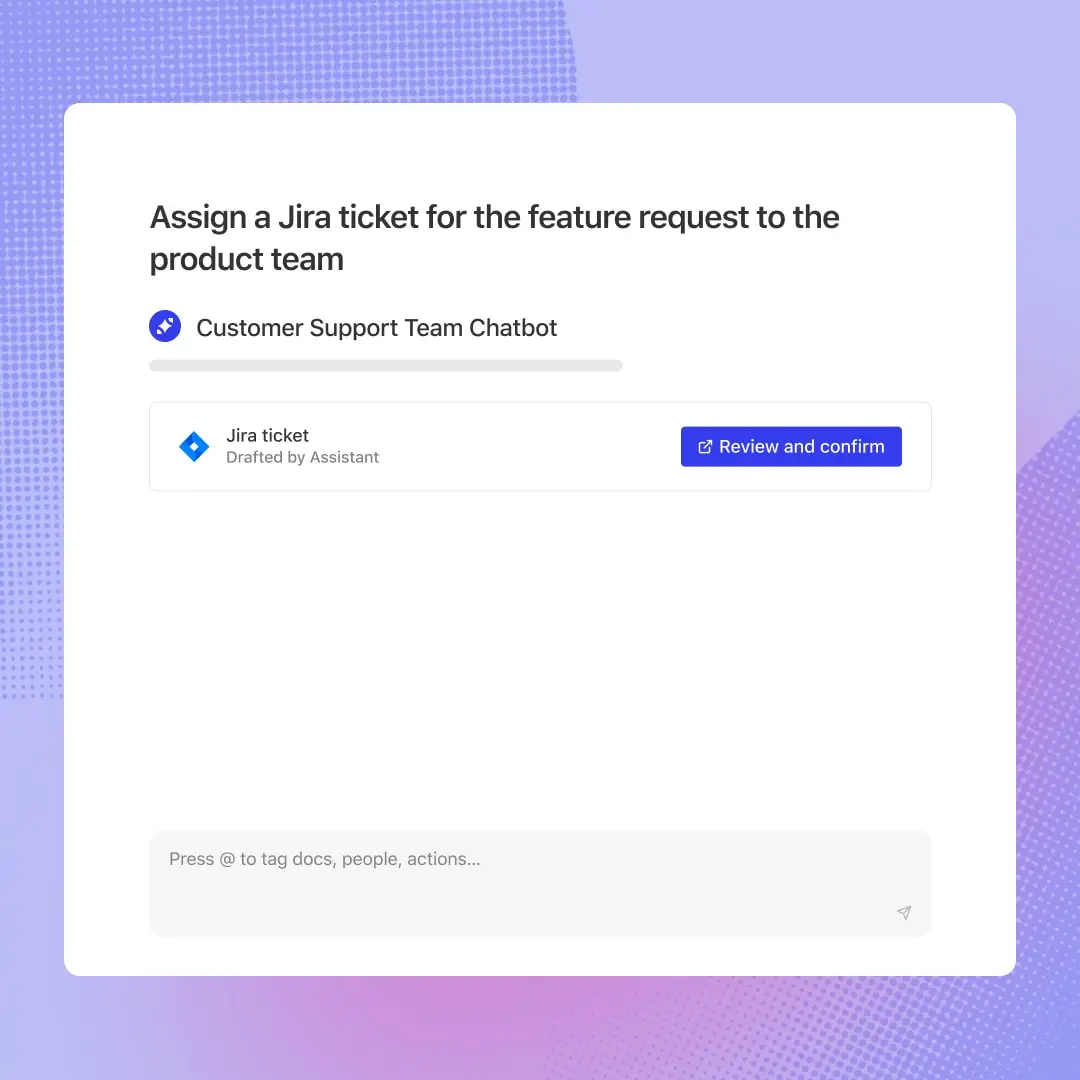
Find a company or shadow a company that has repeatable processes. Record yourself and the employees doing a particular task, such as responding to customer support tickets, sending those tickets to Jira, uploading it on Notion, having intercom support tickets, the salespeople attending sales calls, the pitches that they use, the collateral that they use, all of that stuff and figure out where the automation can come in and your agent can take over from those particular use cases.
Take Harvey AI. It's not just automating legal workflows; it's transforming law firms by taking over tasks like contract review, due diligence, and litigation prep. Imagine a junior associate that never sleeps, misses a deadline, and constantly improves. Similarly, EvenUp focuses on personal injury law, automating settlement demand letters and allowing attorneys to focus on strategy instead of paperwork. In healthcare, Freed and Deepscribe help doctors reclaim their time. AI voice agents schedule appointments, transcribe patient interactions, and suggest diagnoses. AI Agent Tennr helps healthcare professionals read faxes and enter data. Building a vertical solution offers tremendous value–you can capture a dominant market, establish credibility, and build a moat around your community.
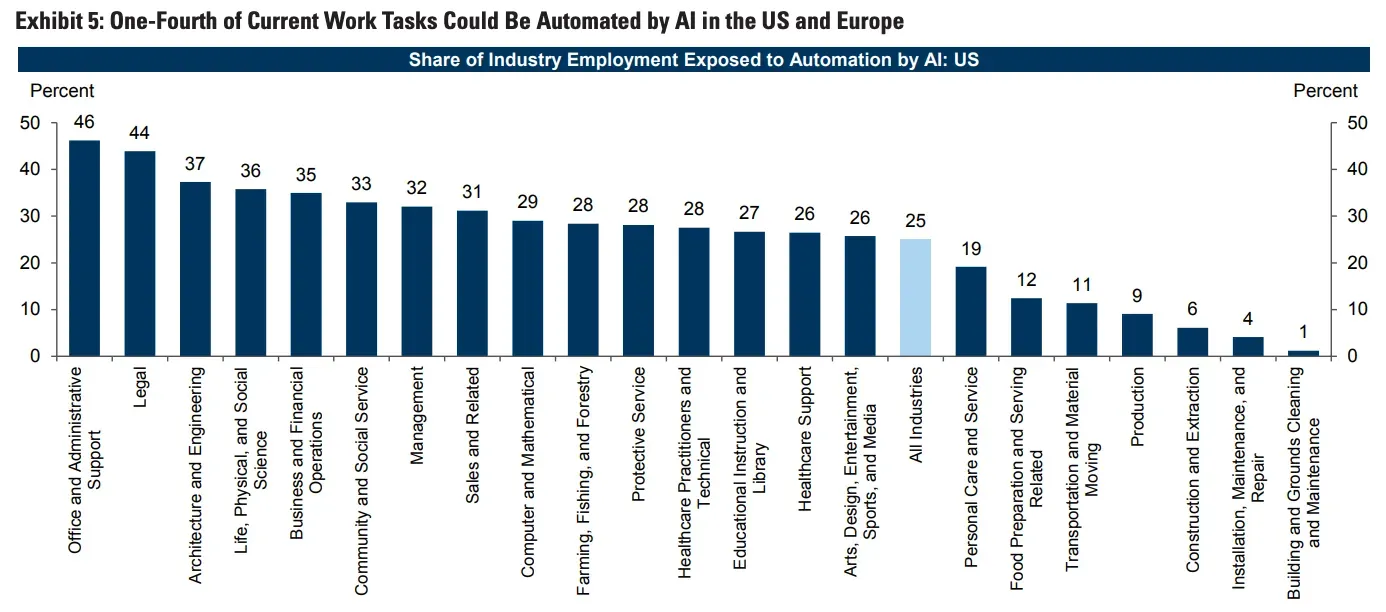
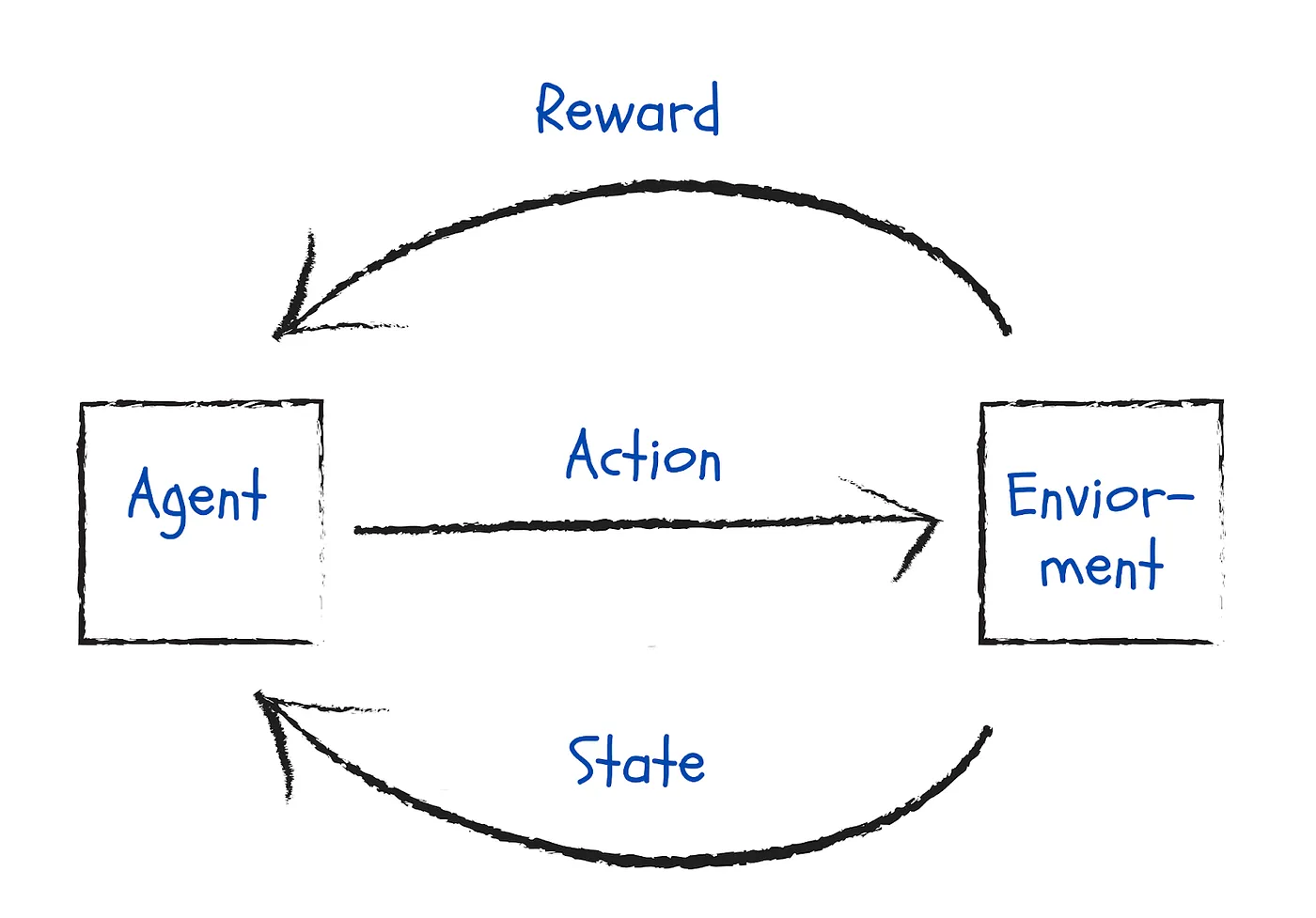
Your models will improve as you fine-tune them on domain knowledge. Since agents use reinforcement learning, the more tasks they do, the better they learn and the faster they perform. Coupled with the decreasing cost of inference computing, you wonder–what are these agents ultimately capable of?
Here's the playbook on how to build in vertical AI:
-
Target language-heavy industries: Identify a language-heavy industry: Look for fields where unstructured text data--like contracts or medical notes--is a bottleneck for productivity.
-
Focus on a core pain point: Identify the most frustrating, repetitive task your audience faces and solve it first.
-
Leverage LLMs for workflows: Build agents that process unstructured data, reason through complex problems, and improve over time.
-
Bundle solutions over time: Start narrow, but bundle by adding products: Once you've automated a workflow, look for complementary tasks to create an integrated compound product to build long-term technical & distribution moats.
-
Fine-tune with domain-specific data: Use reinforcement learning to make your model an expert. The more tasks your agent handles, the smarter it becomes.
Start with a niche vertical use case to wedge into the market; add products layer on top and bundle adjacent use cases to build a compound product that's defensible.
2. Build connections across different tools within that niche
The next step here is to build connections across different tools within that niche. So for example, if you're building something in the legal space, you might want to connect your agent with a case relationship manager tool or an AI paralegal tool, depending on the tech stack. So the more connections you make, the more integrated it becomes with the overall tech stack and you try and build out an ecosystem around your platform. And then once you create enough of these connections, you end up becoming a horizontal product in that vertical niche.
3. Create templates around different agents and have influencers distribute it
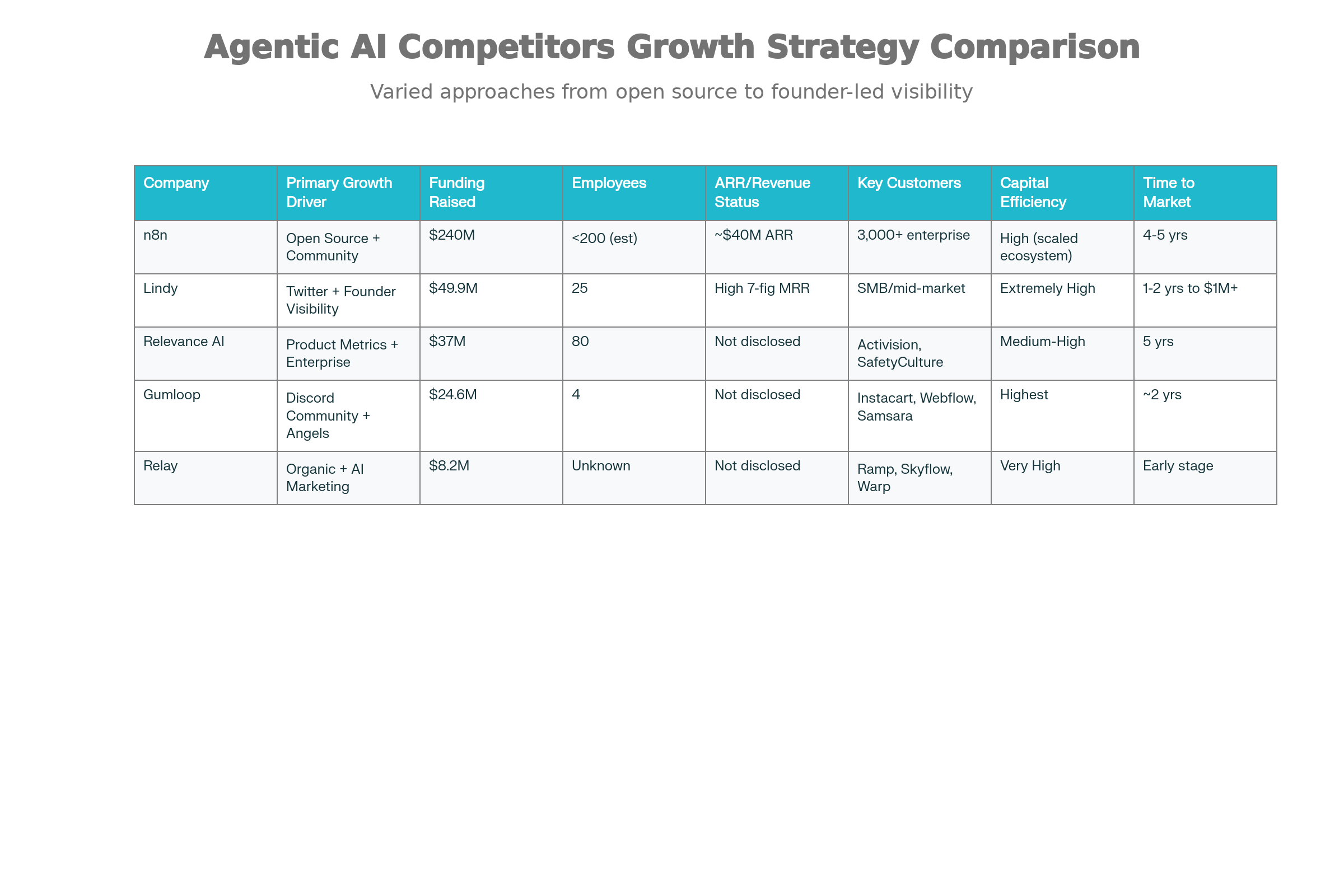
Create templates around different niches. Create templates around these different agents and hire influencers to distribute it. This is similar to how Clay did it when they hired influencers in the sales niche who were promoting these Clay workflows and stuff and other people in that same niche followed suit. This will be applicable only if you are trying to leverage a product-led growth motion where you are trying to get users as much as possible and then slowly scaling it up to a sales-led growth motion. This is similar to how companies like Gumloop and Relay have also done it where you can see Jacob Banks, the founder of Agentic Application Layer Relay, using these templates and these agentic workflows to build traffic and get users in their growth funnel. If I were to guess, then Relay is also having a similar plan to move upmarket and target enterprise customers. So this seems to be a proven playbook.
4. Scale up to Sales Led Growth and move upmarket
Once you have the initial influx of users, you want to scale up to sales-led growth and move upmarket and become a more compound horizontal product like Rippling did. In this case, we have two options. You can either become a compound product within that vertical niche or you can embody a different approach and encompass more industries and become a very well-defined horizontal product that will cater to different use cases. It depends on the kind of feedback that you get from your users and your market saturation levels.
This playbook should work pretty well. Of course, it's easier said than done.
Enterprises don't adopt agentic software because it's cool. They adopt it when it's boringly reliable: when permissions are airtight, when citations are real, when the system knows when to say "I don't know," and when the agent's output survives contact with messy org reality. That's the bar Glean quietly raised--and it's the bar every serious builder has to clear in the next phase of software.
I hope you found this essay useful - now go ship!
The MarketCurve Newsletter
Essays on brand building, GEO, and winning in the AI era.
Written for founders and AI-native teams. No fluff — just the ideas that actually move the needle.
Subscribe on Substack →Want writing like this for your brand? MarketCurve works with a small number of fast-growing AI-native companies each quarter.
Book a discovery call →